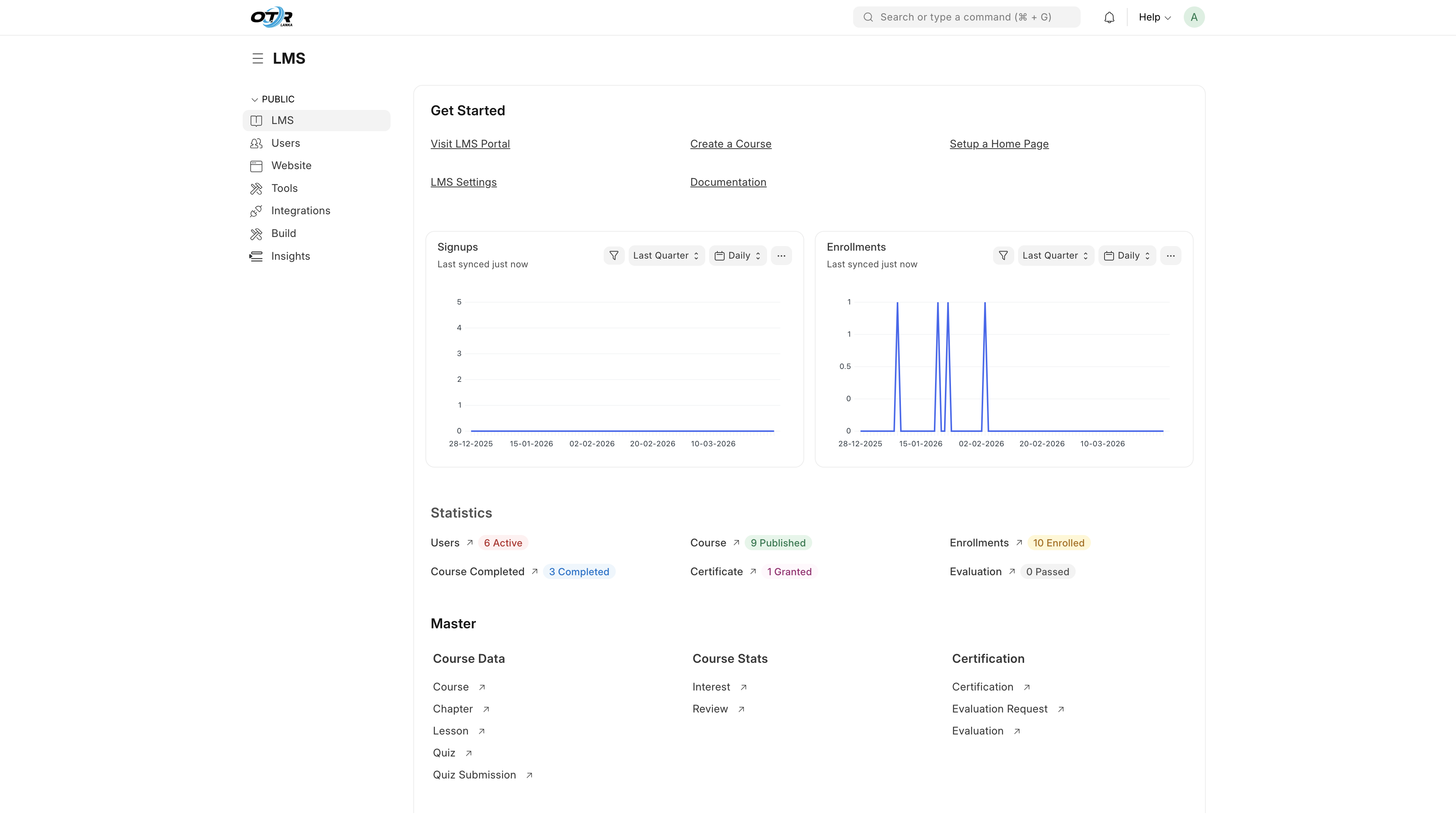
Key Metrics
Project Overview
Executive Summary
OTR Lanka required more than a traditional LMS — they needed a controlled enterprise learning ecosystem where data security, role isolation, and operational simplicity were critical. The goal was to enable seamless employee training while ensuring that no internal user interacts with the underlying ERP framework.
Business Context
As the organization scaled, training processes became fragmented and difficult to track. Departments operated independently, reporting was inconsistent, and monitoring employee learning progress required manual intervention. This created compliance risks and operational inefficiencies.
Key Objectives
- Centralize all training operations into a single system
- Implement strict hierarchical access control
- Enable department-level performance tracking
- Deliver a fully white-labeled platform
- Eliminate dependency on backend/admin panels
System Architecture
The solution was built using a layered architecture approach to separate business logic, access control, and user interface.
- Presentation Layer: Custom Desk UI + LMS Frontend
- Application Layer: Frappe Framework with custom scripts
- Data Layer: MariaDB with extended DocTypes
- Analytics Layer: Frappe Insights dashboards
Role-Based Access Control (RBAC)
A multi-layered RBAC system was implemented to enforce strict data access policies across the organization.
- Super Admin (restricted backend abstraction)
- Managers (department-level visibility)
- Instructors (course management only)
- Employees (limited LMS access)
Permissions were enforced using a combination of Role Permissions Manager, User Permissions, and custom server-side validation logic to prevent unauthorized access at both UI and API levels.
Data Model Customization
Standard LMS structures were extended to support enterprise-specific data requirements.
- Custom Employee Profile fields (Employee ID, Department, Role)
- Department-linked course assignments
- Training progress tracking at individual and group levels
- Certification and completion records
Automation & Backend Logic
Extensive automation was implemented using server and client scripts.
- Auto-enrollment based on department
- Dynamic quiz evaluation and scoring
- Scheduled report generation
- Trigger-based notifications for course updates
UI/UX & Branding
The entire system was transformed into a fully white-labeled product aligned with OTR Lanka’s brand identity.
- Removed all default Frappe branding
- Custom navigation and dashboard layouts
- Simplified workflows for non-technical users
- Branded certificates and print formats
Reporting & Analytics
A comprehensive reporting system was implemented using Frappe Insights.
- Department-wise training progress dashboards
- Individual performance tracking
- Exportable PDF reports
- Real-time analytics visualization
Security Implementation
Security was treated as a core system requirement rather than an afterthought.
- Strict permission enforcement at database and API level
- Hidden backend routes and restricted endpoints
- Validation hooks to prevent unauthorized actions
- Controlled data exposure across roles
Deployment & Delivery
The system was deployed in a staged manner to ensure stability and adoption.
- Development & internal testing
- Role-based QA validation
- Staging deployment
- Client training sessions
- Production rollout
Business Impact
The implementation significantly improved operational efficiency and visibility.
- Reduced manual reporting workload by over 70%
- Enabled real-time monitoring of employee progress
- Improved compliance tracking across departments
- Standardized training workflows organization-wide
Future Enhancements
- Single Sign-On (SSO) integration
- Mobile-first LMS interface
- AI-driven learning recommendations
- Integration with HR systems
Key Takeaway
"Delivered a scalable, enterprise-grade LMS that automated training workflows, improved visibility across departments, and eliminated reliance on backend operations."